
 Hafsah Shehzad
Table of Contents
When it comes to correcting your vision, you’ve got choices—glasses or contact lenses. But did you know that the prescriptions for these two aren’t quite the same? It’s true! Understanding the difference between a contact lens prescription vs glasses prescription is key to getting the perfect pair of lenses. Trust me, once you get the hang of it, you’ll feel way more confident about picking the right fit for your eyes. So, let’s break it down, shall we? I’ll walk you through what makes them different and how you can even convert between the two if you need to. Ready? Let’s go!
Understanding Contact Lens vs Glasses Prescription
A prescription for contact lenses and one for glasses may seem similar, but they have significant differences. While both prescriptions are designed to correct your vision, the way they work and the measurements they require differ.
a. Differences in Measurements
-
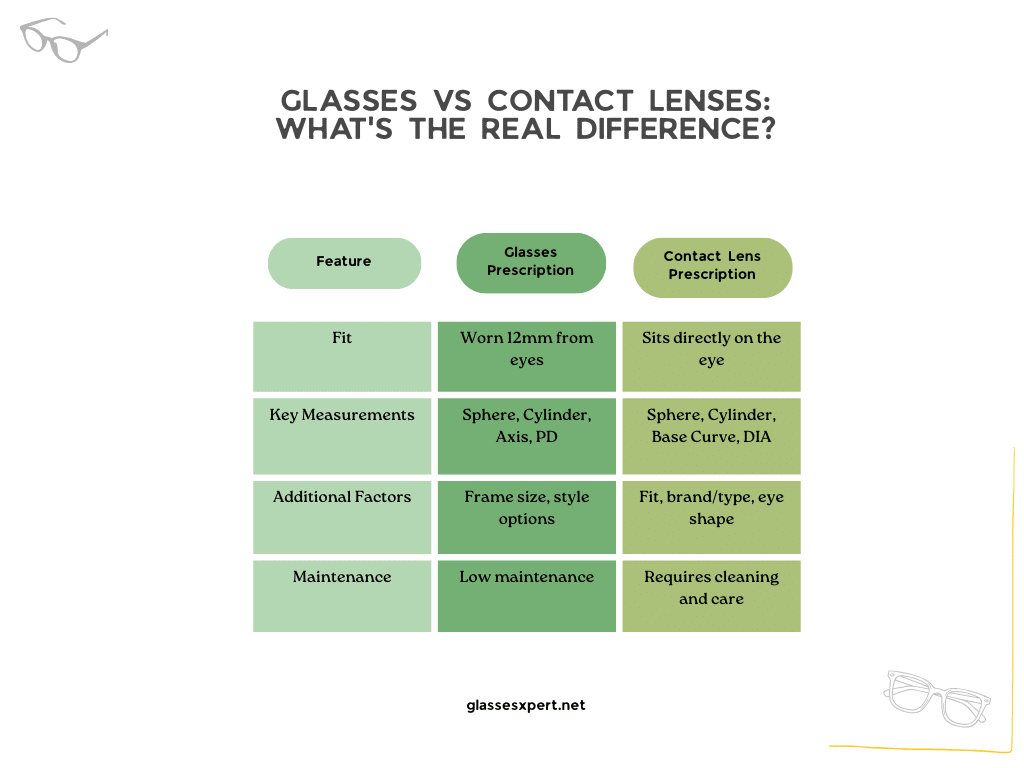
Glasses Prescription: A glasses prescription includes measurements that are designed to correct your vision at a distance of about 12mm from your eyes, which is the typical distance between your eyes and the lenses. It includes:
- Sphere (SPH): The strength of the lens required for nearsightedness or farsightedness.
- Cylinder (CYL): The amount of astigmatism.
- Axis: The orientation of the astigmatism correction.
- Pupillary Distance (PD): The distance between your pupils, critical for proper lens placement.
-
Contact Lens Prescription: A contact lens prescription, on the other hand, includes all the measurements above, but it also adds additional elements that take into account the way the lens sits directly on the eye. These include:
- Base Curve (BC): The curvature of the lens that matches the curvature of your eye.
- Diameter (DIA): The size of the contact lens, typically between 13.8mm and 15mm.
- Brand/Type: The specific brand and type of contact lenses you need, as there are various materials and features (e.g., extended wear, toric for astigmatism, or colored contacts).
Since contact lenses sit directly on your eye, the prescription has to be more specific about how the lenses fit on your eye’s surface.
b. Impact of Fit and Comfort
- Glasses: Glasses sit around 12mm away from the eyes, and the lenses can be larger, allowing more room for flexibility in terms of fit and comfort. They can also provide additional protection against environmental elements like wind, dust, and debris.
- Contacts: Because contact lenses sit directly on the eye, the fit is much more crucial. A contact lens prescription takes into account factors like the shape and size of your cornea to ensure proper fitting and comfort. The wrong prescription or fit can lead to discomfort, irritation, or even eye health issues.
c. Additional Considerations
- Eye Health: Contact lenses require careful maintenance and hygiene to avoid eye infections, whereas glasses are less demanding in terms of hygiene.
- Convenience and Aesthetics: Glasses may be more convenient for some people since they don’t require daily care, but contact lenses offer a more natural look and are less prone to fogging, making them a preferred option for people who lead active lifestyles or engage in sports.
Converting Between Contact Lens Prescription and Glasses Prescription
If you have a contact lens prescription and want to use it for glasses or vice versa, it’s not as simple as swapping out one prescription for the other. You can’t directly use your contact lens prescription vs glasses prescription because of the differences in how they sit on your eyes.
How to Convert?
- From Glasses to Contact Lens Prescription: If you want to wear contacts but only have a glasses prescription, it’s best to consult an optometrist. The optometrist will measure your eye’s shape, curvature, and size to determine the right base curve, diameter, and lens type for your contacts.
- From Contact Lens to Glasses Prescription: If you need to convert your contact lens prescription vs glasses, the optometrist will calculate the right strength for your lenses. Since contacts sit closer to the eye, the prescription strength might need adjustments.
Keep in mind that you should always have an eye exam and a consultation with your optometrist before switching from one type of correction to the other.
Glasses vs Contacts Prescription: Which One Is Right for You?
Choosing between glasses and contact prescription depends on several factors, including lifestyle, convenience, and eye health. Here’s a breakdown of the pros and cons of both:
Advantages of Glasses
- Ease of Use: Glasses are easy to put on and take off without worrying about cleaning, putting them in, or taking them out.
- Eye Protection: Glasses can help protect your eyes from wind, dust, and debris.
- Fashion Statement: Glasses can be a style choice, with many frames and designs available, including options like cat eye frames or colorful styles.
Advantages of Contact Lenses
- Natural Appearance: Contacts offer a more natural look without frames.
- No Fogging: Contacts are less likely to fog up, making them ideal for physical activities, especially sports.
- Greater Peripheral Vision: Contacts provide a wider field of vision since they sit directly on your eyes, unlike glasses.
If you’re an active individual or prefer a more discreet look, contacts prescription might be the better choice. However, if you enjoy the style or convenience of glasses, prescription eyeglasses and contact lenses are both solid options to consider.
Choosing the Right Prescription for Your Eye Health
Credit: discovervision.com
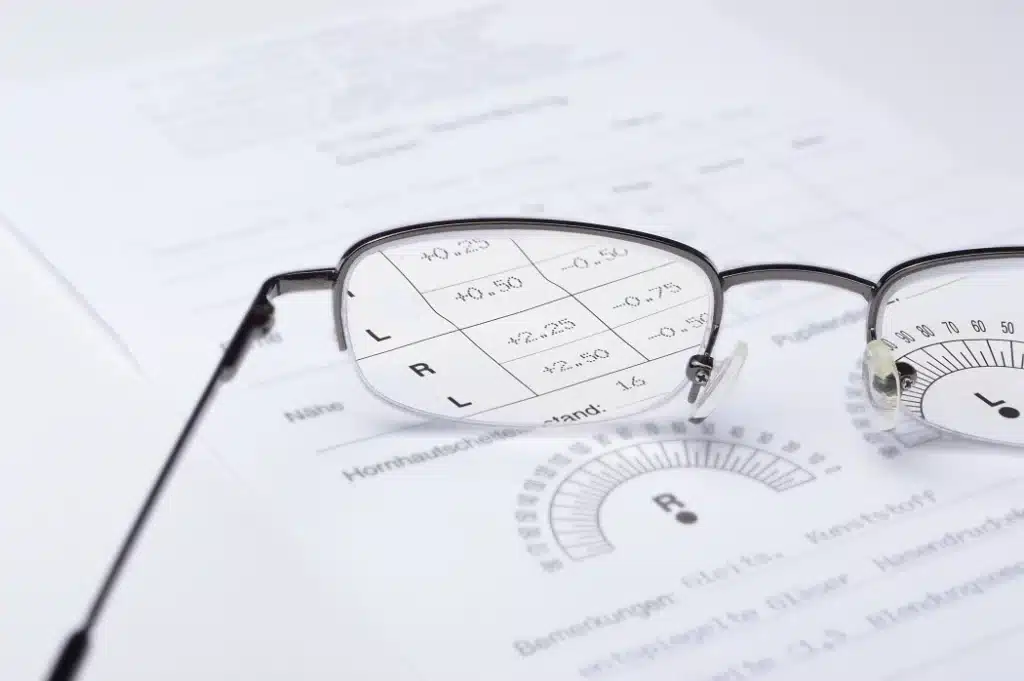
When deciding between contact lenses and glasses, remember that your eye health should be your top priority. Always get a comprehensive eye exam from an optometrist to ensure that you’re selecting the correct prescription for your needs.
Types of Prescription Glasses
There are many different types of prescription glasses, depending on your needs. Some common types include:
- Single Vision Lenses: Ideal for people with nearsightedness or farsightedness.
- Bifocals: Lenses that provide two types of vision correction—one for distance and one for close-up tasks.
- Progressive Lenses: Multifocal lenses that allow for seamless transition between different distances.
- Blue Light Glasses: These are designed to reduce the strain from screen use, which is especially important for those who spend long hours in front of digital devices.
You can learn more about different types of glasses, including blue light glasses and other options, here.
FAQ’s
Here’s a quick look at some common questions about contact lens vs glasses prescription:
Can I use my contacts’ prescription for glasses?
No, a contacts prescription cannot be used for glasses because they fit differently on your eyes.
What is the difference between a glasses prescription and a contact lens prescription?
Contact lenses require additional measurements like base curve and diameter, while glasses are measured with standard lens strength and pupillary distance.
How do I know if my contact lenses fit correctly?
If your contacts cause discomfort or irritation, they may not fit properly. See an optometrist for adjustments.
What happens if I wear the wrong prescription?
Wearing the wrong prescription can cause discomfort, headaches, and eye strain. Always consult an optometrist for accuracy.
Can I wear both glasses and contacts?
Yes, many people wear both depending on the activity or personal preference.
The Bottom Line
In conclusion, whether you prefer contact lens prescription vs glasses prescription or a combination of both, it’s important to choose what’s best for your eye health and lifestyle. For more information on glasses designed for specific needs, like sports glasses, you can check out options like boys’ sports glasses.
As you explore the differences between contact lens vs glasses prescriptions, always consult an eye care professional to ensure you’re making the best choice for your vision needs and eye health.

