
 Hafsah Shehzad
Table of Contents
Eyeglass lens coatings are not just a trendy add-on to your glasses—they actually do a lot to improve your vision, protect your lenses, and make wearing glasses more comfortable. Whether you’ve been rocking glasses for years or you’re just starting your eyewear journey, understanding these coatings can seriously make a difference.
I remember when I first learned about the different types of lens coatings and how they could change the game for me. It was like discovering a whole new level of comfort and clarity! So, let’s break it down together and explore how these coatings work—and how they can take your glasses experience to the next level!
A Guide to Eyeglass Lens Coatings
You’ve probably come across terms like anti-reflective coatings (AR coating), scratch-resistant coatings, or UV protection when shopping for new glasses. But what do these coatings actually do, and why are they important for you? Here’s the deal: Eyeglass lens coatings are thin layers that get applied to your lenses. They’re designed to boost the durability of your glasses, improve clarity, and protect against things like UV rays, dust, and smudges. Some coatings even enhance the look of your glasses, while others focus on specific functional benefits.
In this guide, I’ll walk you through the different types of lens coatings for glasses, what they do, and how to keep them in top shape. So, let’s dive in and make sure your lenses last longer and work better!
Here’s a quick overview of the benefits:
- Durability: Coatings like scratch resistance protect your lenses from everyday wear and tear.
- Clarity: Coatings such as anti-reflective (AR) reduce glare, improving your vision in low light or when driving at night.
- Protection: UV coatings shield your eyes from harmful UV rays, and anti-fog coatings keep your lenses clear in different temperatures.
- Aesthetics: Some coatings give your glasses a sleek, shiny look and can even prevent reflections.
Stick around, and I’ll break down the details of each coating type!
Types of Lens Coatings
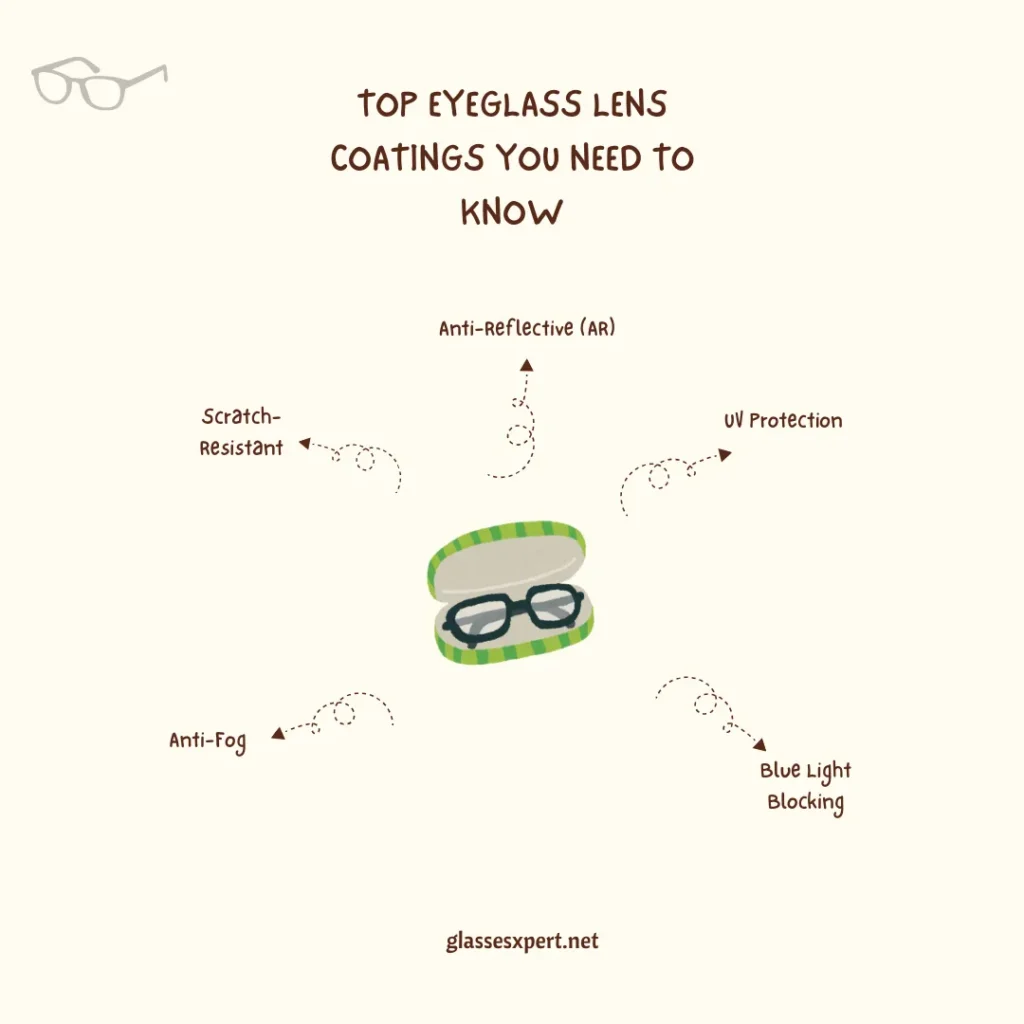
So, you’ve decided to get your lenses coated—but what type of coating do you need? Here’s a quick rundown of the most popular types of lens coatings for glasses:
Anti-Reflective Coating (AR Coating)
This is one of the best lens coatings you can opt for! If you’ve ever noticed reflections on your lenses or had trouble seeing in low light, AR coating is your go-to solution.
- Reduces reflections: AR coatings eliminate reflections, allowing more light to pass through your lenses, which means clearer vision.
- Improves aesthetics: AR coatings give your glasses a sleek, shiny look, so people see your eyes instead of reflections.
- Helps with night driving: If you find driving at night difficult due to glare from headlights, AR coating reduces this discomfort.
If you’re curious about how AR coating works and why it’s so effective, you can check out more details here.
Scratch-Resistant Coating
Let’s face it, lenses can get scratched easily. Whether you’re taking off your glasses and putting them on a table or accidentally wiping your lenses with the wrong cloth, scratches can appear.
- Prevents scratches: This coating helps protect the lens surface from minor scrapes and scratches.
- Longer lens lifespan: With a scratch-resistant coating, your glasses last longer and continue to provide optimal vision.
Although no coating is entirely scratch-proof, scratch resistance can make a significant difference, especially for plastic lenses.
UV Protection Coating
You already know the damage UV rays can do to your skin, but did you know they can also harm your eyes? UV protection coatings block harmful UV rays from entering your eyes.
- Protects your eyes: UV coatings help reduce your risk of developing cataracts or other eye diseases caused by prolonged exposure to UV light.
- Protects your lenses: UV coatings also protect the lens surface from degradation, ensuring they last longer.
It’s always a great idea to opt for a UV protective lens if you spend time outdoors or drive a lot during the day.
Anti-Fog Coating
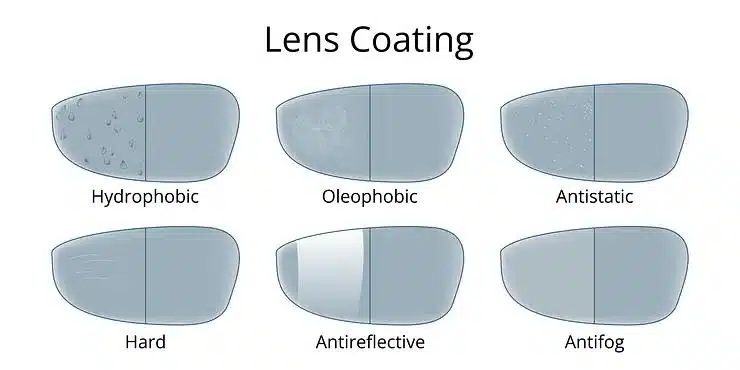
Credit: fyidoctors.com
If you’re someone who wears glasses while moving between different temperatures—like stepping inside from the cold into a warm room—you’ve probably struggled with fogging.
- Prevents fogging: Anti-fog coatings prevent condensation from forming on your lenses, keeping your vision clear no matter the temperature difference.
- Ideal for athletes: If you wear glasses during workouts, outdoor activities, or sports, anti-fog coatings are a must-have!
Fogging can be incredibly frustrating, but with the right anti-fog lens coating, you won’t have to worry about your vision getting blurry at the worst moments.
Blue Light Blocking Coating
In today’s digital age, we spend a lot of time in front of screens—smartphones, computers, tablets, and more. This means more exposure to blue light, which can cause eye strain and disrupt your sleep cycle.
- Reduces eye strain: Blue light blocking coatings minimize the impact of prolonged screen time, helping to reduce fatigue and discomfort.
- Better sleep quality: If you’re someone who struggles to fall asleep after a long day of screen use, these coatings can help reduce the disruption caused by blue light exposure.
If you’re working from home or spending hours on your devices, blue light blocking coatings are a great addition to your glasses.
Photochromic Coating
Do you find yourself constantly switching between prescription sunglasses and regular glasses? Photochromic lenses are the solution.
- Light-adaptive: Photochromic lenses automatically darken when exposed to sunlight, providing protection from harmful UV rays.
- Convenience: They eliminate the need for separate prescription sunglasses, making them a versatile option for anyone on the go.
If you spend a lot of time outdoors, photochromic lenses will keep your eyes protected without the hassle of switching between different pairs of glasses.
Which Lens Coating is Right for You?
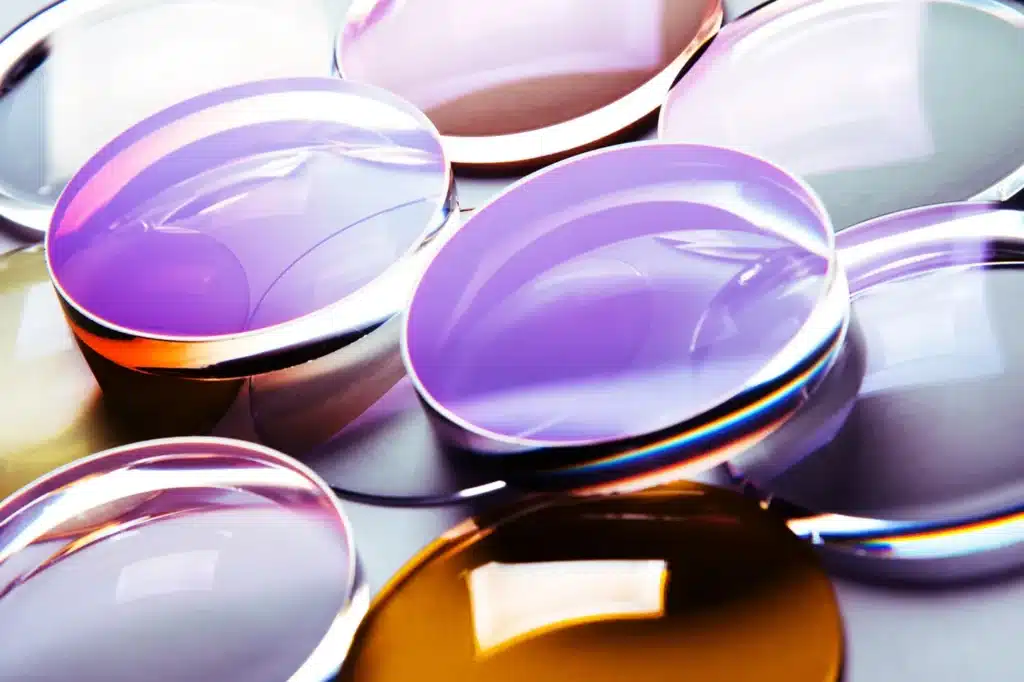
Credit: lensology.co.uk
Choosing the best lens coating depends on your lifestyle, needs, and the activities you do regularly. Here’s a quick guide to help you decide:
a) Need clearer vision and reduced glare?
Go for an anti-reflective coating. It’s ideal for people who work with screens or drive at night.
b) Active lifestyle and outdoor exposure?
Opt for UV protection and photochromic coatings to protect your eyes from the sun and environmental factors.
c) Frequent fogging or working in varying temperatures?
Anti-fog coatings will keep your lenses clear.
d) Spending too much time on devices?
Blue light blocking coatings are perfect for protecting your eyes from the strain caused by screen time.
Maintaining Your Glasses Lens Coatings
You’ve made the investment in quality lens coatings for glasses, but now how do you ensure they last?
Here are a few simple tips to maintain your coated lenses:
- i. Clean regularly: Use a microfiber cloth to wipe your lenses clean of dirt, dust, and oils.
- ii. Avoid harsh chemicals: Don’t use household cleaners or abrasive cloths that could damage the coatings.
- iii. Store properly: Keep your glasses in a case when not in use to prevent scratches and preserve the coatings.
- iv. Avoid wiping when dirty: If your lenses have dirt on them, rinse them off with water before cleaning with a cloth to prevent scratching.
Taking care of your glasses will ensure that the coated lens lasts for years and continues to provide the best possible vision!
Ending Remarks
Now that you have a better understanding of eyeglass lens coatings, it’s time to make the best choice for your vision! Whether you’re looking for scratch resistance, UV protection, or blue light blocking, there’s a coating for every need. Don’t forget to maintain your lenses and keep them clean so they continue to provide you with clear, comfortable vision for years to come.
FAQ’s
Got questions about eyeglass lens coatings? Let’s answer them here!
What’s the best lens coating for glasses?
It depends on your needs! Anti-reflective and UV protection are great for most people, but if you’re outdoors often or on screens a lot, try blue light blocking or anti-fog coatings.
Can lens coatings wear off?
Yes, they can. Frequent cleaning or harsh conditions can wear them down, so it’s important to care for your glasses properly.
How do I stop my glasses from fogging?
Choose anti-fog coatings—they’ll keep your lenses clear, especially when moving between different temperatures.
Do scratch-resistant lenses really work?
Yes! They help protect your lenses from everyday scratches, but they’re not completely scratch-proof.
What’s AR coating for glasses?
Anti-reflective (AR) coating reduces glare and reflections, making your vision clearer, especially at night or while using digital devices.
Hope this helps clarify things!

